
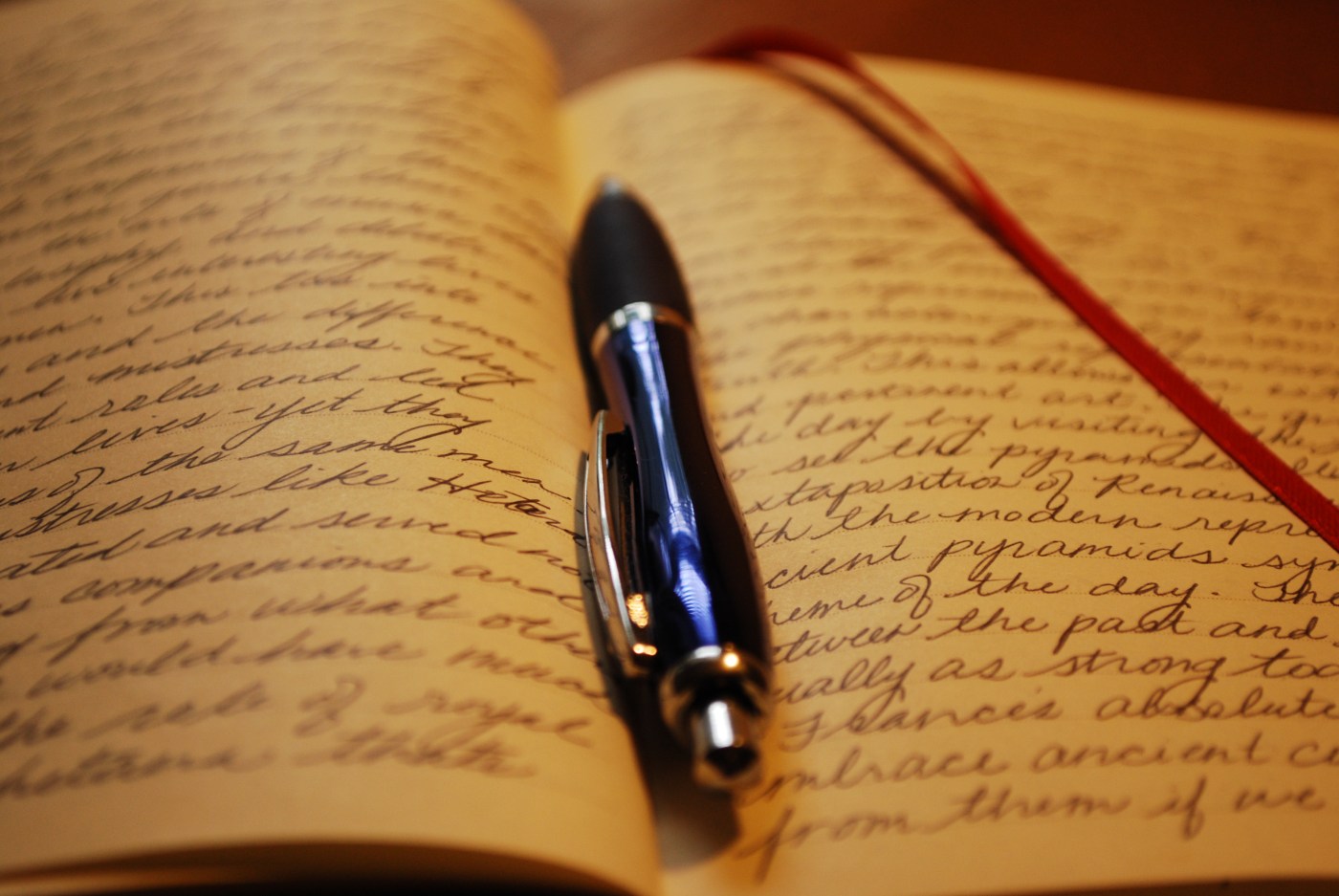
For the sake of the topic relating to Christianity, a journal is a chronological record of changes you experience to archive the work of God in your life. It can account for daily events, a notebook to record insights into Scripture, a list of prayer requests, theological musings, or venting frustrations, emotions, and pouring your heart out to God. Whatever you want to keep track of to help you later in life. Because sometimes we need to learn again…and again…and again, what we learned before.
The word, remember, is used frequently in Scripture. Why? Because God wanted His people to remember His faithfulness to them, as well as their times of faithfulness to Him, and what the outcomes were. It was a way to connect to God in a real and tangible way.
The following are several reasons why every Christian should journal.
Self-understanding and evaluation
First and foremost, it is used for self-understanding and self-evaluation. Log what you are doing at the moment, as well as log what the outcome was, and the process you took to get from A to Z, with stops at each letter along the way.
It is very important to know thyself, and analyze the data that you have so meticulously incorporated in your journals. They may seem like a waste of time writing them down, but reading them later will give you a head start for future problems or lessons you need to learn.
Help in expressing thoughts and feelings to the Lord
Psalm 62:8 says we should pour our hearts to God. Part of my journal is venting frustration, anger, bitterness; as well as joy, thankfulness, and blessings to the Lord. We are emotional creatures, and we should be able to vent our emotions out on paper. In my journals I express frustration, anger, joy, love, and all the emotions in between.
There are times I look back and I not only read what happened, but I can still feel how I felt in those moments. When I read them years later, I can still remember the pain, and praise God that He got me through it. Life is hard, and we should be willing to write it down and express how we feel.
There are times in the morning where I cannot concentrate no matter what I do. It is a jumbled mess. To get through those times, I do Morning Pages. The idea taken from Julia Cameron’s book, The Artist’s Way, Morning Pages are three pages of longhand writing, strictly stream-of-consciousness that may or may not have any point behind it. The cool thing is that many times my ramblings turn into blog posts. So I also keep a composition notebook with my Morning Pages.
Help in remembering the Lord’s faithfulness
I will remember the works of the LORD; Surely, I will remember Your wonders of old. I will also meditate on all Your work, and talk of Your deeds.
Psalm 77:11-12 NKJV
It is so good to go back and read your journal entries of when things were rich and exciting in serving the Lord. To remember the amazing things God has done when you were thriving at moments you are currently failing. Not only that, but it is great to look in times of great pain and heartbreak to read later on how the Lord walked with you through those times, and how you fared on the other side of trouble.
Do yourself a favor and do a biblical study of the word, remember. It is mentioned 164 times in 160 verses throughout the New King James Version of the Bible; and that doesn’t even include variations of the word like, rememberace. To remember God’s covenant with HIs people, remember His promises, and how amazing He is. To remember the good times when you are in the midst of the bad. All of these, and more, lend help in our sanctificaiton and help us in our daily walk with the Lord.
Help in clarifying and articulating insights and impressions
Several months ago, a friend who has a similar type of website asked me how I came up with all of these things to write about. “Life,” I said. “Most of what I write about comes from thinking about Scripture, thoughts I have about the Bible, or just things I think about throughout the day. As of right now, I have over thirty articles waiting to be published.”
I’ve always been a deep thinker. Even when blog rolls were not invented yet, I was writing down thoughts and contemplating life and eternity.
Before I started PensAndWrenches.com, I kept a three-ring-binder I called, “The Morgue.” It was where my ideas went to die in hopes that they would be resurrected from the dead, or at the very least, become zombies. Maybe not zombies. I would hope that my ideas and insights would fill brains and not eat them. But thoughts today may not be for you at the moment, but later on down the road. It is good to keep them safe for just the right time.
Help monitoring goals and priorities
It is important to not only write down our goals and priorities, but also read and monitor them so we know we are on the right track/path to accomplishing them.
One of the greatest preachers of all time, George Whitefield, was also known for his discipline in journaling to maintain self-accountability in his spiritual goals and priorities on a daily basis. His diary begins with a list of criteria he used each night as a basis of self-examination.
“Have I,
- Been fervent in prayer?
- Used stated hours of prayer?
- Used ejaculatory [spontaneous] prayer each hour?
- After or before every deliberate conversation or action, considered how it might tend to God’s glory?
- After any pleasure, immediately given thanks?
- Planned business for the day?
- Been simple and recollected in everything?
- Been zealous in undertaking and active in doing what good I could?
- Been meek, cheerful, affable in everything I said or did?
- Been proud, vain, unchaste, or enviable of others?
- Recollected in eating and drinking? Thankful? Temperate in sleep?
- Taken time for giving thanks according to (William) Law’s rules?
- Been diligent in studies?
- Thought or spoken unkindly to anyone?
- Confessed all sins?”1
Each daily entry consisted of two parts, one on each page. The first page consisted of specific activities for the day, and evaluated per his fifteen questions. On the second page, according to his biographer, Arnold Dallimore, “He records any unusual activity throughout the day, but above all, gives expression to his inner self. The longings of his soul, a searching of his motives, severe self-reproach for the slightest wrong and bursts of praise to God, are all recorded without inhibition.”2
Though this may seem like overkill or at worst — legalistic, it gives in to the fact that men like this put their entire focus on conforming to the image of Christ.
Creates and preserves a spiritual heritage
Sometimes our journals are not for us, but for others. They could be written to give encouragement to our children or grandchildren for years to come. What an amazing gift it would be to read the thoughts of your father when he was your age, or a great-great-grandfather during one of the most turbulent times of history. Since I do not have children, they will more than likely not be passed on to the next generation. They would be meaningless to them. Or would they?
One of the greatest, if not the greatest devotional of all time is Oswald Chambers’ book, My Utmost for His Highest. Several years ago, a website was formed. About the book, it says:
My Utmost for His Highest continues to challenge and encourage people all over the world, through more than 13 million copies printed, a mobile app, website, email, and social media sharing. A century after his death, Oswald Chambers still guides people on their journey to knowing God better.
https://utmost.org/oswald-chambers-bio/
It was the diligence of his wife, Gertrude Hobbs Chambers, that put in the effort to have it published. What if later on someone was able to take your notes that you thought were of no value to anyone else and turn them into a best-selling book? Wouldn’t that be something?
Tools to help you get started
There are a wide variety of jounaling mediums you can use. Some prefer the electronic method like the fictional television character, Doogie Howser; while others prefer simple pen and paper. Each of them have their pros and cons. Electronic files can get corrupted but take up less space on a shelf; paper can be burned, get wet, and suffer the elements but last through any technology change the world offers up. The choice is up to you, but here are some of the tools I use for journaling.
Journal
First, I use the traditional pen and paper because I want my thoughts to last throughout any change in technology. If you prefer this method: the journal you use, especially if it is kept for posterity, should be made of durable hardcover binding along with acid-free pages. Also, it shouldn’t be very big so as to be able to be carried around and written on a daily basis. Medium, A5 sized (5.7 in x 8.3 in) is a great size and fits well in the palm of your hand. Here are some of my favorite brands:
- Leuchtturm 1917: Designed in Germany, these journals are my favorite for my everyday bullet journal. They come in plain, ruled, bullet and squared formats; hard or soft cover; a wide variety of colors; and sizes to choose from. You can also choose from the 120G line, which is a thicker, higher quality 120g paper for low transparency and bleed-thru.
- Piccadilly: These I use for my black journals and are fairly inexpensive. I bought several to last me a while at $5.98 each from Barnes & Noble. Very sturdy binding, acid-free paper, with a pocket and 240 pages. Mine is the Essential Notebook, medium ruled, ISBN# 978-1-57133-553-1. Just as tall as the Lechtturm 1917, but not as wide (5.25in). They also have a wide variety of themes, guided notebooks, and pdf (electronic) notebooks as well if you were planning on using something like Samsung Notes.
Pens and writing utensils
When it comes to pens, choose something that is archival quality, with minimal bleed-thru in your journal. They don’t have to be expensive either. Some people have designer pens, which is cool, but make sure the ink is of good quality. For some reason ink from Japan is the best. Here two I use:
- Uni-ball Vision Micro: You can pick these up at any Staples, and I’ve seen them where I shop for groceries too. Fairly inexpensive. The writing is quite thin, minimal bleed thru, and soaks into the pages to keep the writing clear for 100+ years. For an added bonus, these pens are airplane safe, whereas other brands have been known to leak due to changes in cabin pressure.
- Sakura Pigma Micron: These are very nice pens, but can be quite expensive. With a wide variety of writing sizes, they are great to use to set up charts and diagrams for bullet journals. The pens are made in Japan, and use premium 100+ year archival ink that are Art & Creative Materials Certified (ACMI). Personally, I would use these to set up your journal, but not for everyday use because of their cost.
- Short ruler and protractor: I keep a small 6 in ruler along with a protractor inside the pocket of the journal. I don’t use the protractor very much, but it comes in handy when doing graphs and the like.
The right way…is your way
There is no right or wrong way to write a journal. It is really what you are comfortable with, what you want to save for later use, and how far into the future you want it to be saved. Why not start today?
- Arnold Dallimore, George Whitefield: The Life and Times of the Great Evangelist of the Eighteenth-Century Revival (Westchester, IL: Crossway Books, 1979), vol. 1, page 80.
- Dallimore, pages 80-81.
 Pens & Wrenches
Excellent brother. I did transition from physical to virtual for a variety of reasons. The biggest the ability to search and find thoughts.
Regardless, journaling is very important. Thanks for the insight.
LikeLiked by 1 person