
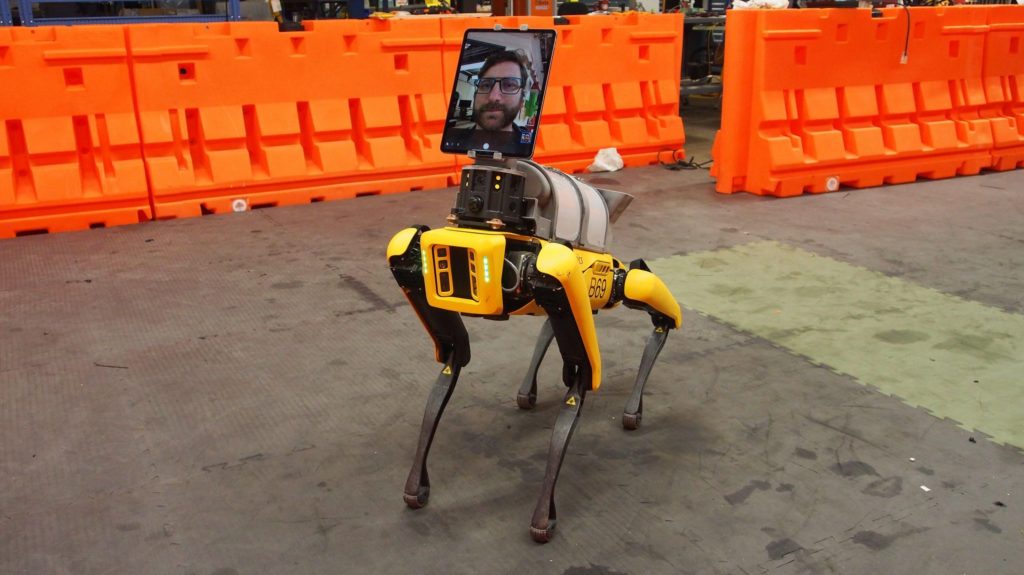
In today’s world, we increasingly find ourselves attributing human qualities to inanimate objects and animals, while simultaneously stripping away the humanity of actual people. Whether it’s assigning emotions and motivations to household gadgets, or elevating pets to the status of family members, society seems to blur the lines between what is truly human and what is not. This absurd trend, while often harmless on the surface, carries deeper, more dangerous implications. When we dehumanize real individuals, we risk eroding empathy, fostering division, and weakening the moral fabric that holds society together. In an era where technology and social media amplify these distortions, the consequences of misplacing our compassion could be far-reaching.
Humanizing Things
In the 2000 film Castaway, Chuck Noland, played by Tom Hanks, discovers a volleyball on the island and draws a human face on it with his own blood, attempting to make it feel more real. What starts as a seemingly humorous act—talking to the volleyball—soon evolves into a deeper, almost delusional relationship. As he adds grass for hair and begins holding full conversations with the ball, he responds as though it’s talking back, even engaging in arguments with it. Watch the clip below as it unfolds:
What seemed like a joke in castaway twenty-five years ago is now reality and is to become the norm in todays society. Check out the following Ted Talk from five years ago by Dr. Julienne Greer on how she, as a drama teacher, is teaching robots to become more human.
As you can see, bringing a sense of emotional empathy to robots has its uses. There are many elderly in nursing homes or live alone that could use a friend, as in the seal robot, Paro, used to help those in advanced Alzheimers Disease. But these devices are nothing more than devices. They are programmed to give off the “perception” of empathy in a performance, not have empathy itself. They cannot feel anything. They are programmed with the user in mind to help the user cope with reality. As Dr. Greer states, “Social robots are not trying to take the place of dogs and cats and living human beings. They are filling a gap.”
But, what if Dr. Greer—or an institution of learning—were to teach actual human beings how to be more empathetic? Wouldn’t that be a more benneficial? I imagine it would. But how would you accomplish such a thing? Make it a mandatory class in grade school and/or highschool like health or science. Maybe churches could get on board with something like this.
We are in the throes of a paradigm shift when it comes to humans interacting with robots and don’t really know what the implications could be. They could be positive, or negative.
Humanizing Animals
Moving further down the rabbit hole, people also humanize non-human animals like dogs, cats, and other furry creatures. This doesn’t mean that they’re crazy, but like succumbing to robot empathy, we may be putting bandaid on a much bigger problem.
It’s not a problem as much as it might be an indicator to a problem or something going on. It doesn’t mean that people are weird when they give their cat a human name, talks to it and calls it “sweetie.” It means that she’s lonely. It means that she yerns to have a conversation and human touch. It means that she hasn’t seen people in a few days. When the cat sits on her lap it brings her comfort and a sense of peace. It’s warm, and her fur is soft. She’s getting comfort any way she can.
Animals do have an emotional side, and some studies suggest that they also exibit empathy. They feel more than robots for sure. Dogs, for example, can sense when a person is in pain. A true emotional support animal can offer comfort to someone experiencing deep trauma; even if the dog is acting out and performing a task, the recipiant sees it as comfort and receives it as such.
Dehumanizing Humans
But, there is a dark—vanta black, dark—side and the main reason for this article. It is the dehumanizing of actual humans. This is not adding something to a person’s life to help them cope with problems, but the removal of humans from the equation to solve a problem. It’s as if human beings are the problem themselves. But in order for that to happen, they need to be looked upon as non-human.
Climate Change
Take for instance the “problem” of climate change and global warming. Seems innocent enough, right? Can you take a guess as to what causes Global Warming? It’s human beings and their carbon footprint—at least that’s what we are told by the Founder of Microsoft, Bill Gates. Listen to his Ted Talk from 2011 how we as human beings can lower the CO2 immissions by getting rid of human beings through vaccines. It’s all keyed up for you already ironically at 3:57. Just watch below.
Some people in the audience got the hint and were laughing as to the ridiculousness of lowering the population using vaccines, as we all thought that they were supposed to help us live longer, not kill us off sooner. But Bill, he’s not laughing. He’s serious, but he is not interested in being one to leave. What we have witnessed since 2020 is unfortunately the fruition of that talk.
Nazi Holocost
We also saw this during the Nazi holocost where Adolf Hitler killed millions of Jews between 1941 and 1945. In order to erase the Jewish people from existance starting shortly after World War I, the holocost didn’t start in the concentration camps, but ended there. It started much earlier in the minds of the German population through Nazi propaganda and falsehood. Within months of the Nazi Party’s rise to power, laws were made to restrict Jewish people from public life. This excelerated the creation of more laws and protections for white Germans from prosecution of these atrocities. Read this fantastic article: Exclusion of Jews in Nazi Germany about the topic, and how horrible it must have been for them living at that time.
Infanticide
One must think we would have learned from the mistakes of the past, but unfortunatly we havent. Today as millions of humans are exterminated right before our eyes and the purpotrators do it with impunity and under the protection of our own government. Just like the Germans were allowed to do. There is nothing new under the sun, as Solomon said in the book of Ecclesiastes. According to Planned Parenthood’s Annual Report, there were 392,715 abortions performed in the 2022-2023 season. But this doesn’t even scratch the surface compared to the controception pill which is distributed via the United States Post Office to the womans front door. Since Roe v. Wade, there have been over 63 million abortions performed in the United States that have been confimed or verified. This number could actually be tripple.
But, in order to do these vile acts, one must make it palitable that the mother isn’t killing a human baby, but:
- A clump of cells.
- Damaged tissue.
- A parasite.
- A tumor.
- and the list goes on.
Imagine what this does to the human psyche and the mental gymnastics abortion providers must wrestle their seared conscience. Watch the video below.
Where should we go from here?
In a world that increasingly prioritizes the convenience of things and the sentimental attachment to pets over human connection, it is crucial that we return to a mindset that truly humanizes humans and recognizes the inherent dignity of every person. When we invert this order—placing undue value on material possessions or animals while neglecting the deep needs and worth of human beings—we risk losing the essence of what it means to love and care for one another. This can have catastrophic consequences, leading to isolation, division, and a devaluation of life itself. Jesus taught us to love God with all our heart, mind, soul, and strength, and to love our [human] neighbors as ourselves (Luke 10:27). This foundational truth reminds us that all people—made in the image of God—are deserving of our highest respect, compassion, and care (Genesis 1:26-28; Psalm 139:13-14). As we restore the proper balance of valuing human life above all, we cultivate a society grounded in love, empathy, and shared humanity; not relying on robots or animals for it either.
 Pens & Wrenches
Leave a comment